
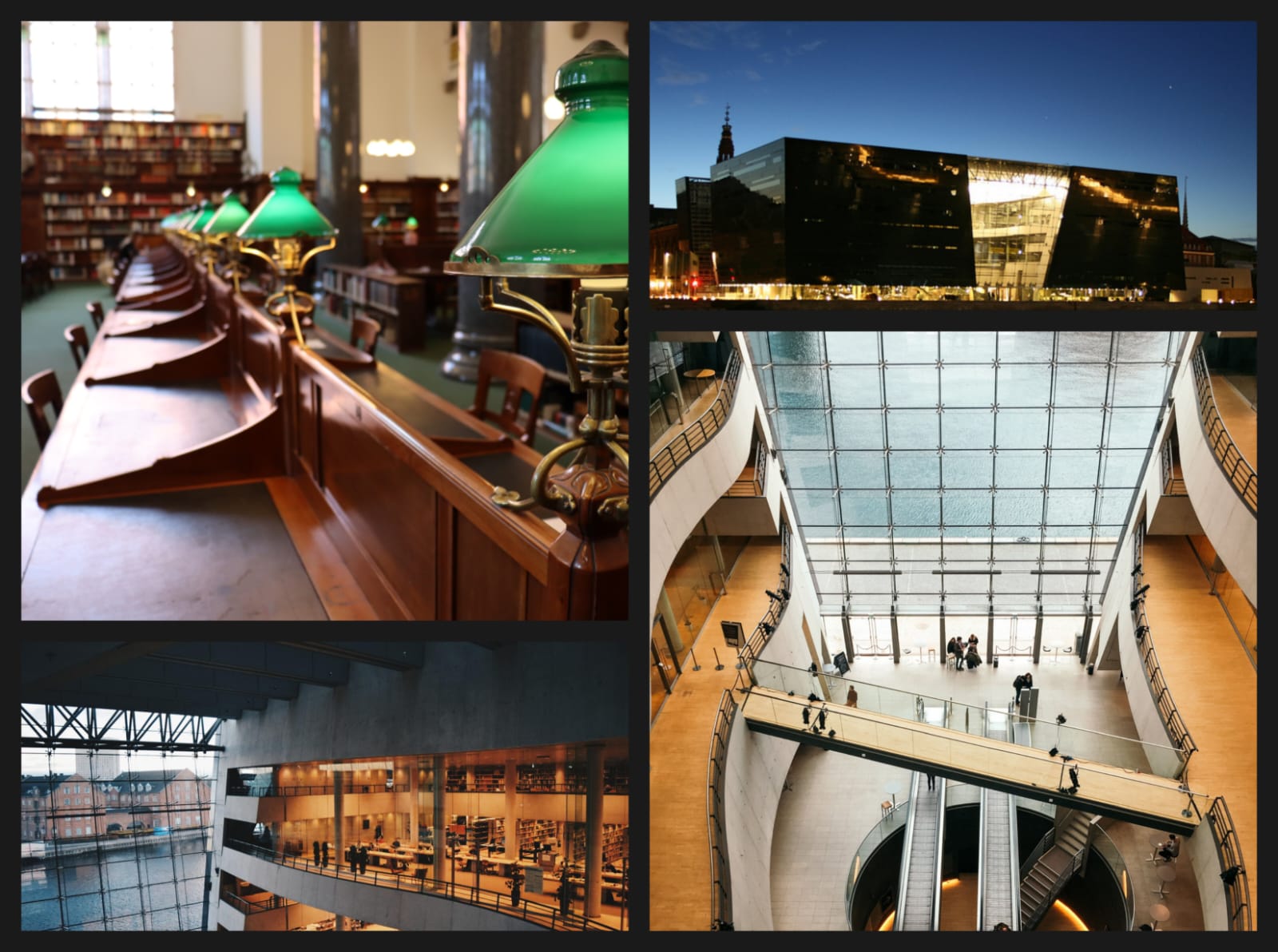
As a young child, I once visited the Black Diamond Library in Copenhagen. At first glance, it looked like something from the future, sleek, angular and impossibly black. Yet, as we stepped inside, I discovered that it was not just a building, it was a conversation.
This modern library is an extension of the Royal Danish Library. Its bold glass façade reflects the shimmering canal beside it, while inside, the structure gently connects to the historic classical library behind it through a central atrium flooded with light. Old meets new. Concrete meets calm. Movement meets stillness. And somewhere in that convergence, something rare happens, people slow down. They pause, they read. They listen. They reflect.
What struck me most wasn’t just the intrigue for architecture, it was what the architecture invited. The building didn’t overwhelm you. It didn’t rush you. It created spaces where silence wasn’t awkward and sitting alone with a book wasn’t strange. It offered a kind of intellectual hospitality. It seemed to say: “Take your time. You’re welcome here.”
As I think about the lives of young people today, including my own, I feel we are losing the spaces that encourage this kind of slowness. Our environment, both physical and digital are noisy, fast and endlessly demanding. We scroll, we swipe, we react unthinkingly. But we seldom sit long enough with an idea for it to grow roots in us. Reading is rushed, if done at all. Thought is interrupted before it can deepen.
But architecture, when done well, can resist this. It can slow us down. The Black Diamond does exactly that, not just with books, but with space itself. It offers corners of quiet calm. Nooks by windows that look out at water. Wide stairs that make you pause. Natural light that changes slowly through the day.
And while Denmark may seem far away, I’ve come to realise that India once knew this design language better than the others.
Our ancient libraries and learning spaces like Nalanda and Takshashila weren’t just centres of scholarship; they were structures of introspection. The courtyards were open to the sky. The walls were thick, absorbing sound. Gurus and students lived in silence. Learning was layered with contemplation.
Even our traditional homes understood this. The aangan (central courtyard) allowed for both gathering and solitude. Green verandas wrapped our houses in gentle shade, slowing down light and time alike. Libraries in old princely states like Saraswathi Mahal in Thanjavur were not functional spaces alone. They were sanctuaries.
Somewhere along the way, we traded this sensitivity for speed. Our schools echo with unending urgency. Our libraries feel like exam halls. Our homes, once open and breathable, are now boxed and hurried.
But perhaps it is time to return, not to the past, but to our forgotten principles.
We must build and rebuild spaces that invite reflection. Classrooms that have light, not just projectors. Libraries with places to sit and stay, not just shelves to store. Community spaces that value calm reflection as much as performance.
We must also encourage a culture where reading is not only a skill but a way of being with slowness, attention and dialogue. Not every thought needs a post. Not every silence must be filled with updates.
The Black Diamond taught me that architecture can lead us inward. It can become the starting point of deeper living. And it reminded me that India too, has known this truth that reflection thrives not only in philosophy, but in the spaces that hold it gently.
We don’t need grand buildings to reclaim it. A reading corner by a window. A shaded corridor in a school. A quiet walk under trees. When we shape our surroundings with care, reflection returns not as an activity, but as a way of life.
The design of our spaces is the design of our minds.
- ps://en.wikipedia.org/wiki/Saraswathi_Mahal_Library
- https://www.kb.dk/en/visit-us/black-diamond-copenhagen/about-building
- https://en.wikipedia.org/wiki/University_of_ancient_Taxila
- https://en.wikipedia.org/wiki/Nalanda_mahavihara





Leave a Reply