
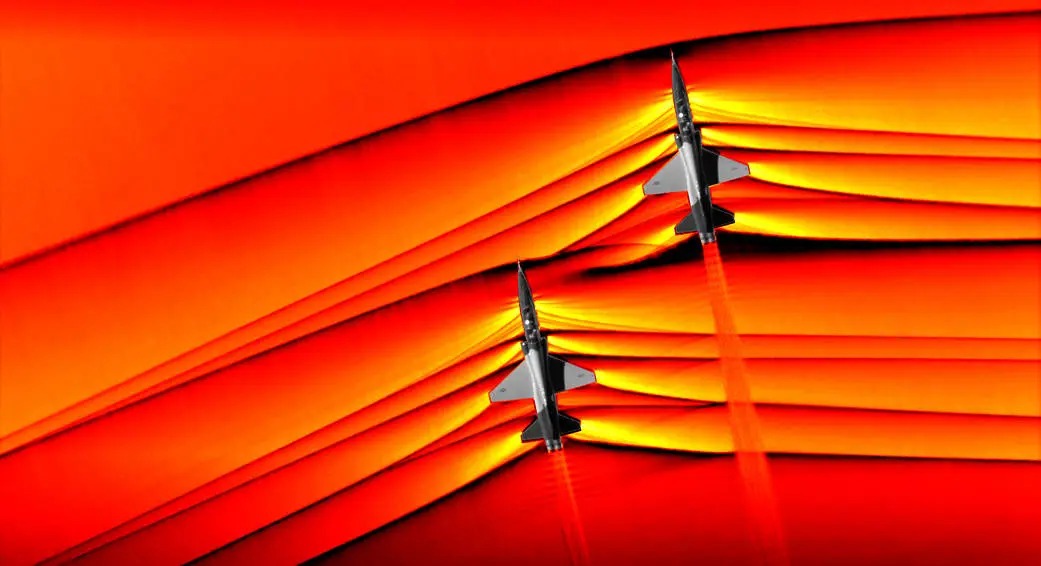
“Your mission, should you choose to accept it, is to make the invisible visible.”
That line from ‘Mission: Impossible’ kept ringing in my mind as I stood inside the optics lab at IISc, Bengaluru. Just a few feet in front of me was something that felt straight out of a sci-fi movie — a setup that could literally let us see air move. No joke.
As someone who geeks out over jets, rockets and anything that cuts through the sky at Mach speeds, I always imagined air as this invisible force we feel but never really see. But then came the Schlieren system — and suddenly, the unseen became visible. I wasn’t just watching science happen; I was experiencing it.
Wait, What Is Schlieren Anyway?
Schlieren (pronounced SHLEE-ren) comes from a German word meaning “streaks.” Cool, right? The technique was first developed by August Toepler back in 1864, but here I was, 160 years later, watching it in action with modern tech.
In simple terms: Schlieren imaging lets us see air, heat and sound waves by detecting how light bends when it passes through areas of different density. So, when hot air rises or when sound travels through air, it causes tiny changes — too small for our eyes, but enough to bend light. And Schlieren helps capture that bend.
The Science Behind the Magic
Let’s break it down. Normally, light travels in a straight line. But when it moves from one medium to another— its speed changes causing the light to “bend”. That’s called refraction.
Now here’s the twist; even tiny differences in temperature or pressure make air denser or lighter, changing how light moves through it. So, by using some clever optics (mirrors, lenses and a knife edge — no kidding), scientists can detect these teeny-tiny light bends and turn them into visible patterns like waves, streaks and ripples.
It felt like watching the air take a selfie!

Building the Schlieren Setup (And Why It’s Epic)
Here’s what the setup looked like — and trust me, it felt like I was peeking into a magician’s kit:
HD Camera. Captures everything. The moment you see the patterns, it’s jaw-dropping!
Light Source. Could be a simple LED or a powerful laser.
Polarizer. Lets only specific light pass through — kind of like a light bouncer!
Lenses & Mirrors. Direct and focus the light. Parabolic mirrors make light rays go perfectly straight.
Test Zone. The magic happens here — like placing a candle or even your hand to see heat waves.
Knife Edge. Placed at the focus point to split light, so that only deflected rays hit the camera.
Watching it work felt like I was in a surgical strike — like I suddenly had night vision goggles which were able to see all these changes.
Real Life Uses of Schlieren (It’s Not Just for Nerds!)
The more I learned, the cooler it got. This wasn’t just a lab party trick. Schlieren is a serious tool used in industries and research labs all over the world.
- Aerospace and Cars. Engineers use it in wind tunnels to study how air flows over airplanes, rockets and race cars. Helps make them faster and safer.
- Heat Testing. Used to spot how heat leaks out of machines, electronics, or engines. Super helpful in stopping overheating.
- Medical Research. Scientists even use it to study breathing, coughing (with and without masks) and how air moves in and out of lungs. I even saw a demo where they tracked how far a breath could travel — whoa!
Why Schlieren Is Awesome (and a Bit Tricky)
What’s Great
- Lets you see the invisible — like airflow, heat waves and even shockwaves.
- Non-invasive — it doesn’t mess with the object being tested.
- Real-time — you can watch things happen live.
- Works in many fields — from planes to medicine.
What’s Tricky
- Needs precision — even a tiny misalignment messes it up.
- Can be pricey — high end optics and cameras aren’t cheap.
- Only works on transparent stuff — so no, you can’t see through walls with it!
Final Impressions From a 15-Year-Old Who Saw the Air Dance
My day with Schlieren imaging at IISc was nothing short of magical. I walked in thinking the air was just… air. I walked out realising it’s alive with waves, swirls and secrets — if you just know how to look.
Whether it’s watching a jet slice through the sky, understanding how heat escapes from a rocket nozzle or even studying how we breathe — Schlieren makes the invisible come alive.
So, the next time someone says, “There’s nothing to see in the air,” just smile — and tell them there’s a whole hidden world waiting to be discovered. All you need is light, mirrors… and a bit of curiosity.








Leave a Reply