
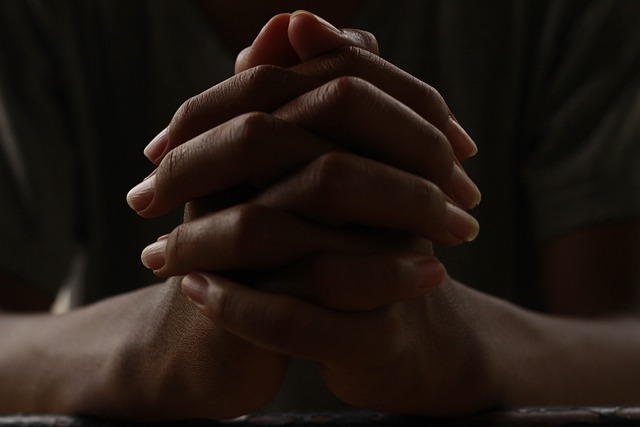
“When the soul suffers too much, it develops a taste for false hopes.”
— Albert Camus
Across every era, on every continent, in every culture we’ve ever known — religion has existed.
It may take different names, wear different faces, and offer wildly different promises, but it’s always there.
Whether in the chants of a jungle tribe or the stained glass of a European cathedral, the impulse is the same: to reach beyond what is visible and give meaning to what hurts, what confuses, what terrifies.
And that’s the thing.
Before religion was a system, a doctrine, a structure — it was a response.
A deeply human response to a deeply human need.
We are pattern-seeking creatures. We don’t just live events — we assign them meaning. When we lose someone, we search for signs. When we’re alone, we imagine we’re still watched over. When disaster strikes, we whisper prayers into our palms, even if we’ve never admitted to believing in anything at all.
Religion, in its most primal form, is not about power or rules — it’s about coping. With death. With suffering. With the unknown. With the weight of our own existence.
It’s not hard to understand why early humans invented gods. Life was brutal, unpredictable, short. And yet… the stars still moved. The seasons returned. The sun rose. Something, they felt, had to be behind it all. Something that saw, that cared — or at the very least, explained.
And in that explanation, they found comfort. Structure. Hope.
Even now, with science explaining much of what once lived in myth, the need for religion hasn’t disappeared. It’s evolved — sometimes fractured, sometimes quietly held, sometimes fiercely defended. But it’s still here.
Because while science can tell us how, it rarely tells us why.
Why do we suffer? Why do we love people who leave? Why do we wake up with that strange ache of longing even when life is “fine”?
Religion tries to answer those questions — or at least, hold them gently in its hands.
It gives death a doorway.
It gives pain a purpose.
It gives life a narrative.
Of course, not all of religion has been kind.
We can’t ignore the wars fought in its name. The people silenced. The dogma enforced. There is pain written into the margins of every holy book — inflicted not by the divine, but by the humans wielding it.
But even that tells us something.
Not just about religion — but about us.
How badly we want to belong.
How fiercely we guard our version of truth.
How easy it is to turn something sacred into something strategic.
Religion is powerful because it operates on the deepest levels of identity, fear, and hope. And anything that powerful can heal — or harm.
And harm, it has. At times, religion has been less a moral compass and more a tool of manipulation — used to rally armies, justify conquest, or legitimize control. In the hands of kings and colonizers, prophets and politicians, it’s been shaped into policy, into punishment, into propaganda. Think of the Christian revolutionary wars, where faith and flag were woven so tightly together it became impossible to separate devotion from domination. Or the countless regimes, past and present, that used divine will to excuse human cruelty. When belief becomes armour, it stops being questioned. When it becomes law, it stops being voluntary. And that’s where the danger lies — not in the existence of faith, but in the exploitation of it.
Still, the core need remains.
We long to believe we are more than biology and time.
We long for connection — not just to each other, but to something bigger.
Something permanent.
Something that makes the chaos of life feel intentional.
And that’s why religion endures.
Even those who reject organized belief often create their own kind of spirituality — a personal cosmology of signs, meanings, rituals. A way to make sense of the world and their place in it. Because it’s not really about gods, at the end of the day. It’s about the ache.
The ache to be seen.
To be forgiven.
To matter.
Psychologically, this isn’t surprising. Studies in cognitive science and behavioural psychology often point to religion as a powerful mechanism for emotional regulation — particularly in the face of uncertainty. The belief in a higher power or divine order offers comfort when logic falls short. It offers hope when reality feels unbearable. In moments of grief, people pray. In moments of fear, they reach for something — anything — that promises control, or at least meaning. Religion doesn’t erase death, but it reframes it. It doesn’t stop pain, but it tells us it’s not pointless. This is especially vital in times of crisis. When tragedy strikes — a loved one dies, a war breaks out, life spirals — people don’t just want answers. They want reassurance. They want to believe that something sees them, hears them, has a plan for them. In that way, religion is not merely a cultural artifact — it’s a psychological response to being human in a world that often doesn’t make sense.
That need, that yearning, runs deep. Even in secular societies, it shows up in other forms — astrology, manifestation, “the universe” as an abstract guide. We keep searching for signs. Keep believing there’s a thread of order behind the mess. Because we are terrified of randomness. Of suffering without meaning. Of living and dying without anyone ever knowing we were here.
Religion, at its heart, tells us we are known.
That we are part of something.
That our pain is not wasted.
And whether or not that’s literally true — emotionally, it feels essential.
Some say that religion is a crutch.
Maybe it is.
But if a person is limping through a world that often makes no sense, is a crutch really such a bad thing?
Maybe the real question isn’t whether religion is true — at least, not in the literal sense. Maybe the better question is why we needed to create it in the first place. What it reveals about us. What it’s trying to hold together inside us.
Because even if the gods we made aren’t real in the way we once believed… the need for them has always been.
And that, in itself, is worth understanding.
It’s important to say this clearly: none of this is meant as an attack on religion, nor a dismissal of belief. This isn’t an argument about whether God exists, or which faith is “right.” It’s not a rejection of devotion, but a reflection on why it exists at all — and why it has always existed. To analyze something is not to belittle it. To ask where it comes from is not to strip it of its value. For many, religion is a source of strength, identity, compassion, and purpose — and that deserves respect. This exploration isn’t about disproving the divine. It’s about understanding the deeply human need behind it. Because whether one believes in God, gods, or nothing at all, the impulse to seek meaning — to reach for something more — is something we all share. And that shared yearning is worth looking at. Gently. Honestly. Without mockery or malice.
I also had to research a fair bit for this article so as to not just be a fool rambling on about things I know nothing of. I’m providing links to the places I went to in case this topic interests you as much as it did me and you want more knowledge, context and actual research.
- https://www.biblicaltheology.com/light/The%20Need%20for%20Religion%20in%20Human%20Life.pdf
- https://en.wikipedia.org/wiki/Psychology_of_religion
- https://www.psychologytoday.com/us/blog/the-pursuit-peace/201712/the-psychology-religion
- https://www.verywellmind.com/religion-improves-health-2224007#:~:text=Religion%20can%20serve%20a%20wide,community%20and%20connection%20to%20tradition.





Leave a Reply