
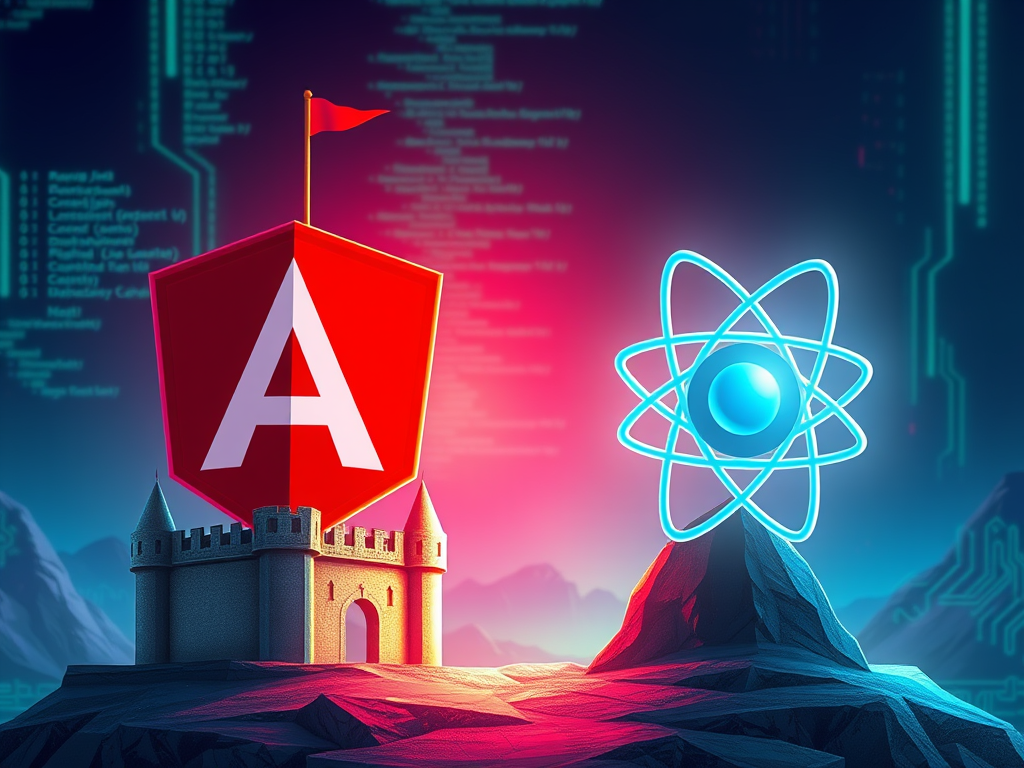
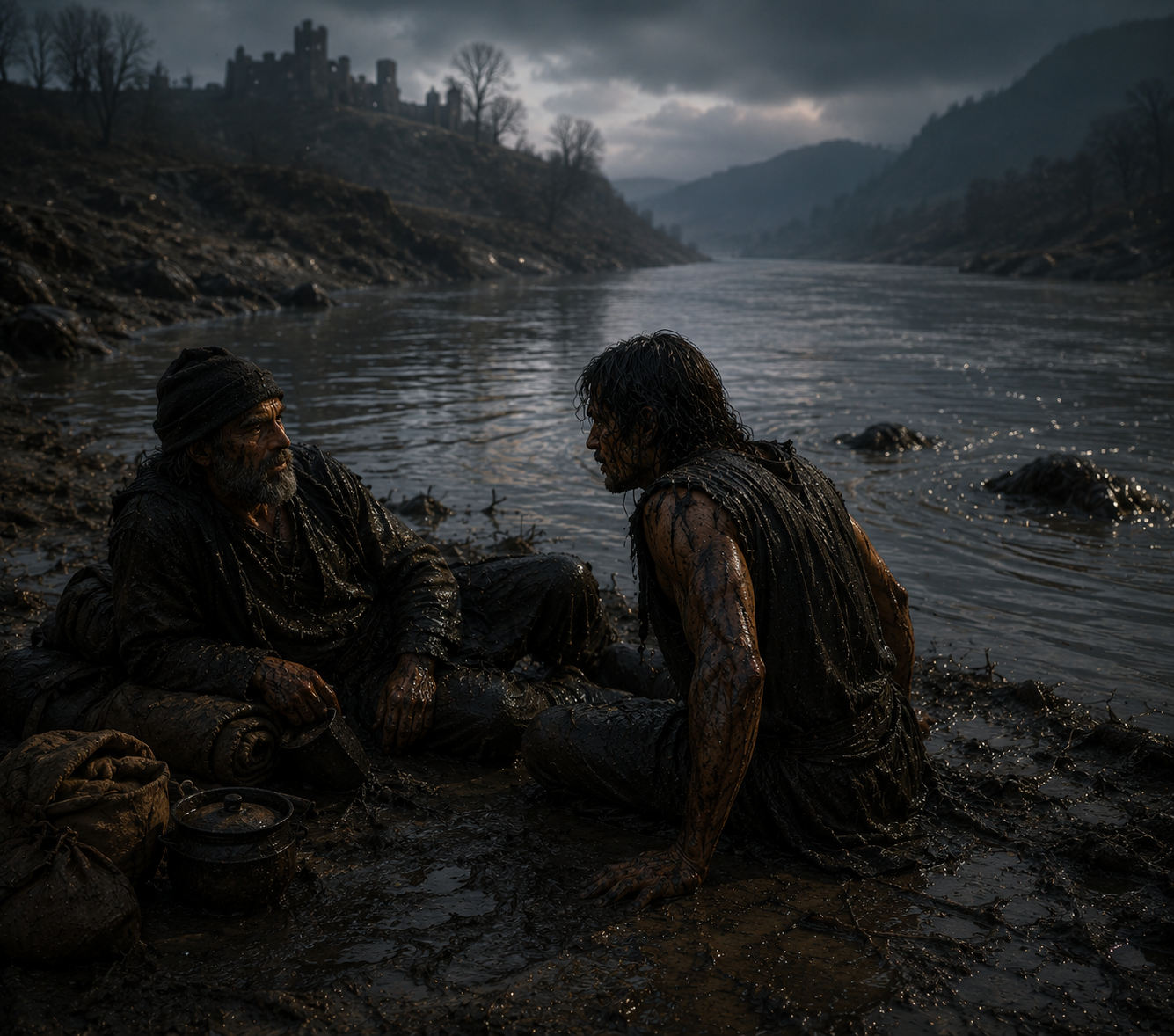
The good land of WebDesignia has a huge river running through it, splitting it right in half. This river of UX-UI divides two kingdoms.
On one side, King Angular, a meticulous and comprehensive ruler commands a highly organized, full-featured kingdom built by Google. His kingdom provides every tool and blueprint needed for grand, complex, and scalable projects, like massive castles and fortified cities.
On the other side, King React, a pragmatic and flexible leader rules a kingdom, born from Meta, that focuses on building the most vibrant and interactive marketplaces, theatres, and homes. His philosophy is to provide the best individual building blocks (components), trusting his people to assemble them as they see fit.
The Clash of Ideologies
Angular’s strength is its clear, structured blueprint. You know exactly where everything goes. React’s power is its flexibility. A simple, reusable building block can be used to create anything from a simple hut to a sprawling marketplace.
Angular’s structured approach makes for a slower, but more stable, building process—ideal for massive, enterprise-level projects with long-term maintenance. React’s flexibility allows for rapid, experimental innovation, perfect for fast-moving startups and highly dynamic UIs.
A future alliance: The rise of micro-kingdoms
A new challenge arises that requires both kingdoms to work together: the fragmentation of the web. Applications are no longer single-entity castles or marketplaces but complex networks of interconnected, smaller systems.
By putting their own individual skills together, they balance out each other’s cons for a fully functional system, the fruit of their alliance.
Thus, the future of WebDesignia isn’t a victory for one kingdom but a synergistic alliance between many. Developers will no longer have to choose a single tool for an entire project. Instead, they will strategically combine frameworks like Angular, React, and even emerging ones like Svelte to build faster, more resilient, and more accessible user experiences for everyone.
*Meanwhile, in the shadows, with WebDesignia occupied with the politics of the new alliance, a new superpower rises: AI agents*
To be continued—




Leave a Reply